A loud bang, then the door won't lift
Torsion springs often break with a sharp report. After that, the opener may hum or move the door only a few inches because the counterbalance is gone.
Serving Arcadia, Florida & surrounding areas
If your door won't open, feels unusually heavy, or you heard a loud bang from the garage, the spring system may have failed. Arcadia Garage Door Repair diagnoses the cause, replaces the right spring type, and resets the door for smooth, balanced lifting.
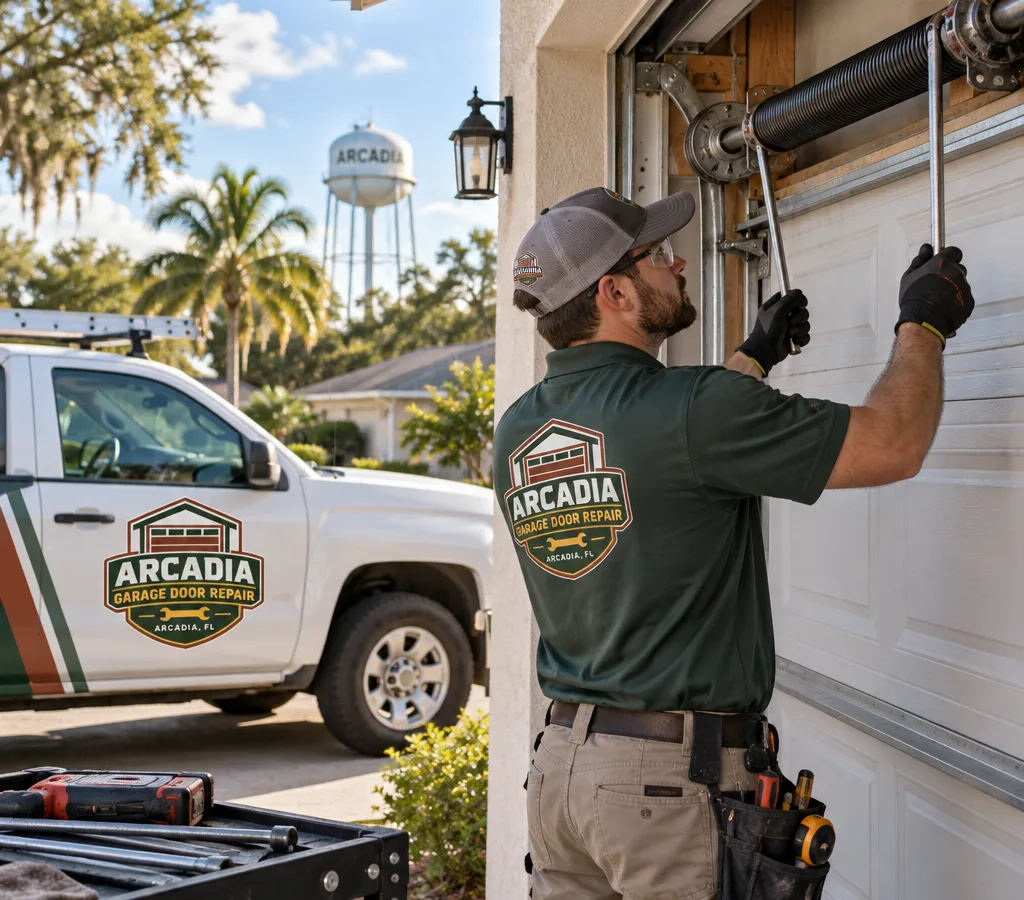
Most garages rely on springs to do the heavy lifting. When a spring breaks or loses tension, the opener strains, cables can go slack, and the door may stop mid-travel or refuse to move.
For garage door spring repair in Arcadia, the goal is simple: restore safe, balanced operation with the correct spring size and proper tension. That starts with confirming what system you have, torsion springs mounted on a shaft above the door, or extension springs that stretch along the horizontal tracks, then matching the replacement to your door's weight and hardware.
Arcadia Garage Door Repair handles spring problems as part of garage door repair in Arcadia, from sudden breakages to doors that have gradually become harder to lift.
Torsion springs often break with a sharp report. After that, the opener may hum or move the door only a few inches because the counterbalance is gone.
A properly balanced door should lift with controlled effort. If it suddenly feels like dead weight, a spring may be broken or severely out of adjustment.
When one side loses tension, the door can rack in the tracks. Continuing to run it can damage rollers, hinges, tracks, or cable drums.
A visible separation in the coil is a clear sign the torsion spring has snapped. At that point the door should stay down until it's repaired.
Openers are designed to move a balanced door. A weak or broken spring can trigger force settings, reversals, or premature wear on the opener.
A spring replacement that lasts starts with the right measurements and hardware checks by a licensed pro, not guesswork.
With torsion systems, a licensed pro identifies the spring setup on the shaft above the door, then sizes the replacement to the door's weight and lift characteristics. Cable drums, lift cables, end bearing plates, the center bearing, and the torsion shaft are also inspected, because worn or misaligned components can overstress a new spring.
With extension systems, a licensed pro confirms the correct spring weight rating and verifies safety containment cables are present and properly routed. Pulleys and sheaves are also checked, because binding or wobbling changes the load the spring sees.
In Arcadia's heat and humidity, metal hardware can corrode and fasteners can seize, making careful disassembly and reassembly important. The finish step is a balance test and full-cycle test so the door lifts smoothly and stays put when partially open.
A licensed pro identifies whether the problem is a broken spring, slipped cable, seized bearing, or a door that's out of balance. If the door is stuck open or uneven, stabilization comes first.
A licensed pro selects the correct torsion or extension spring for the door's weight and configuration. Correct sizing helps prevent slamming, drifting, and unnecessary opener strain.
After replacement, a licensed pro sets tension, aligns torsion-system cables on the drums, verifies track and roller travel, and confirms balance throughout the door's range of motion.
A licensed pro cycles the door multiple times, listens for binding, and confirms the opener can move it without strain, then explains the completed work and any related wear found.
Correct spring sizing, secure cable routing, smooth bearings or pulleys, even tension, and balanced travel all matter. These details help the repaired door move without leaning, binding, or overworking the opener.
No, it's safest to keep the door closed until the spring is repaired, because the door can be extremely heavy and can drop suddenly. If the door must be moved, it should be done with controlled lifting by multiple adults and only if the door is stable in the tracks. Running the opener with a broken spring can burn out the motor or strip gears.
If your door uses two torsion springs and one breaks, replacing both is often the practical choice because the second spring is usually near the same age and cycle wear. Matched springs also help the door lift evenly. After inspection, a licensed pro will explain the condition of the remaining spring and what the balance test shows.
Most spring replacements are completed in about 1 to 2 hours once the correct springs are on hand and the door hardware is in good condition. If cables have slipped, drums are worn, or bearings are seized, the job can take longer because the door must be realigned and tested carefully.
Springs fail from normal cycle wear over time, and they can also break sooner if the door is out of balance, tracks are binding, or the wrong spring size was installed previously. In Arcadia's humid conditions, surface corrosion can also speed up wear on coils and hardware, especially when a garage isn't sealed well.
A broken garage door spring is replaced, not repaired, because once the steel snaps it can't be safely rejoined for counterbalance use. For doors that are simply heavy or drifting, the fix may be an adjustment or correcting related hardware, but a licensed pro confirms the spring condition first.
Keep people and pets away from the door, leave it closed if possible, and stop using the opener until it's inspected. If your vehicle is trapped inside, avoid forcing the door; describe what happened when you contact Arcadia Garage Door Repair so a licensed pro can plan for safe access and the right replacement parts.
If your garage door feels heavy, won't open, or looks uneven in the tracks, getting the spring system checked quickly can prevent extra damage to cables, rollers, and the opener.
Call Now: (863) 485-6854Call Arcadia Garage Door Repair. A licensed pro will confirm the spring type, diagnose the cause, and give you a clear repair plan before any work starts.